
East Wretham Heath – Norfolk Wildlife Trust
Address: A1075 Watton Road, Thetford, Norfolk IP24 1RU
What3Words: draining.such.composts
Parking: Free
Difficulty: Green. Paths are flat and easy but may be muddy if wet
East Wretham Heath is the oldest reserve in the Breckland area owned by the Norfolk Wildlife Trust. The Trust having purchased the site originally at the start of WW2. During the war the site was repurposed for growing food. However since the end of the war with controlled grazing mainly by rabbits, but also on occasions goats, sheep, cows and horses, along with thorough careful management the heath has been restored to an open habitat.
The reserve is home to a number of endangered species of birds such as nightjar and woodlark breed here. As well as these, it is also one of the few remain sites in Norfolk and East Anglia where you will find that redstart still breed.
Due to it’s important features the reserve is designated as a Site of Special Scientific Interest (SSSI). As well as this it has a Special Areas of Conservation (SAC) designation.
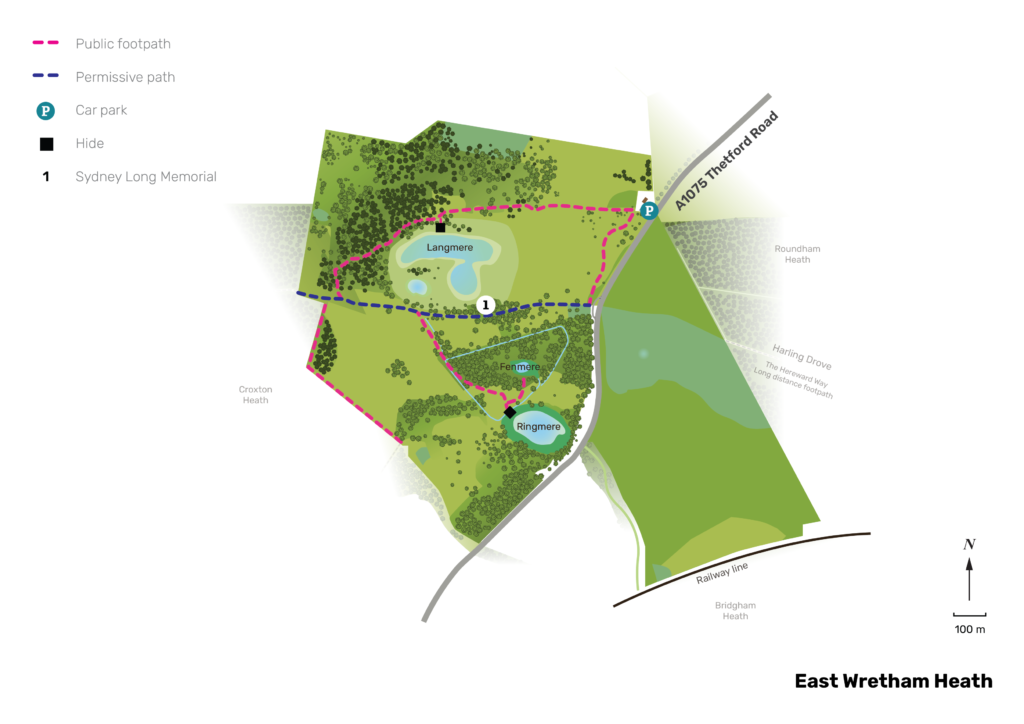
East Wretham Meres
The reserve at East Wretham is known locally for it’s series of small lakes which are also known as meres. Asides this it is amongst some of the final areas of heathland that remain today in the Brecks.
The levels of water seen in the meres vary dramatically over time. They are supplied from groundwater rising from the chalk substrate below. When full the meres are well known to attract wildfowl. Passage waders can then be seen at lower levels when the muddy banks edges of the mere are exposed.
The Norfolk Wildlife Trust (NWT) have produced a handy information leaflet for visitors. The leaflet can be downloaded from their website here.
There are a multitude of different types of habitat to explore when you are here. There is a grassland area which is short and close-cropped which you will find provides a home to a significant number of rare species of insects and plants.
The old Scots pine plantation is understood to have been created early in the nineteenth century, said to be around the time the Battle of Waterloo happened. These old trees provide a strong and distinct contrast to the younger, regular tranches of conifer trees that you often find at other locations in the Breckland area.
Dogs are welcome throughout the reserve on a lead. However the NWT do caution that temporary no dogs zones may be needed on occasion.
The heath is open to the public from dusk till dawn all year round. The best times to visit are almost certainly spring and summer when the heath is at it’s most spectacular.


Leave a Reply
You must be logged in to post a comment.